Old vs New PMP Exam: What Changed on July 9, 2026
Quick Answer: PMI replaced the 2021 PMP Exam Content Outline with a new version on July 9, 2026. Domain weighting shifted toward Business Environment, three new question formats were added, and eligibility rules changed separately. Which version you get depends on your exam appointment date, not your study start date.
As of September 2026, PMI's new PMP Exam Content Outline has been live for over two months, replacing the 2021 ECO that had been in place for five years. If you started studying before July 9, or you're trying to figure out whether material you're using still applies, this post pulls the actual changes into one place rather than leaving you to piece it together across several PMI documents.
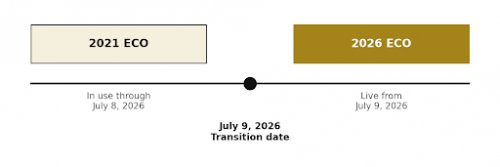
Figure 1: The July 9, 2026 ECO transition
Alt text (paste into CMS): "Timeline graphic showing the 2021 PMP Exam Content Outline in use through July 8, 2026, and the 2026 ECO live from July 9, 2026"
What Changed on July 9, 2026
Two things changed with the new ECO: the domain weighting shifted significantly, and the exam picked up new question formats. Both are covered in depth in their own posts, linked above, this post focuses on the transition itself: what changed structurally and how to tell which version applies to you.
Domain Weighting: The Short Version
|
Domain |
2021 ECO |
2026 ECO |
|
People |
42% |
33% |
|
Process |
50% |
41% |
|
Business Environment |
8% |
26% |
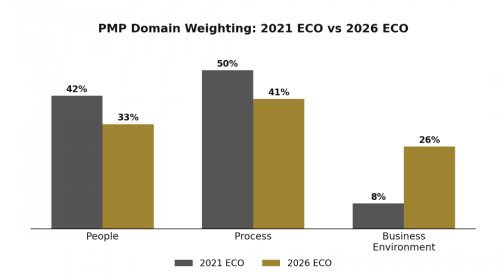
Figure 2: PMP domain weighting, 2021 ECO vs 2026 ECO
Alt text (paste into CMS): "Bar chart comparing PMP exam domain weighting in the 2021 ECO versus the 2026 ECO: People 42% to 33%, Process 50% to 41%, Business Environment 8% to 26%"
Question Formats: The Short Version
The 2021 exam relied on multiple-choice, point-and-click, matching, and pull-down list questions. The 2026 exam keeps all of those and adds Case/Scenario sets, Enhanced Matching, and Graphic-Based questions, formats built to test applied judgment across a scenario rather than isolated recall.
Eligibility Changed Too, on a Separate Track
It's worth being precise here: PMI's eligibility requirements (the experience lookback period, the tiered education path, and later in 2026 a rule about approved training providers) changed on a separate track from the exam content itself. Eligibility decides whether you can sit the exam; the ECO decides what's on it once you do. Conflating the two is one of the more common sources of confusion around this transition.
Old ECO vs New ECO: Full Comparison
|
Area |
2021 ECO (Old) |
2026 ECO (New) |
|
People weighting |
42% |
33% |
|
Process weighting |
50% |
41% |
|
Business Environment weighting |
8% |
26% |
|
Question formats |
5 formats |
8 formats (5 original + 3 new) |
|
New format focus |
Recall and application |
Applied, cross-domain judgment |
|
Effective date |
In use through July 8, 2026 |
Live from July 9, 2026 |
If You Were Mid-Prep When the Exam Changed
If you were actively studying before July 9, 2026, the practical question is which version of the exam you'll actually sit, which depends on your scheduled exam date relative to the transition, not your study start date. PMI's own scheduling system is the authoritative source for which ECO version applies to a specific exam appointment, and it's worth confirming directly rather than assuming based on when you began preparing.
This post doesn't cover PMI's specific grace-period or registration-cutover mechanics for candidates scheduled right around the transition date, those details should be confirmed directly against PMI's own registration system for anyone in that window, since they can change and aren't part of the ECO document itself.
Should You Rush or Wait?
There's no single right answer here, it depends on where your preparation already stands:
- If you're well into a 2021-ECO-based study plan and your exam appointment falls before the transition, finishing under the structure you've already prepared for is often the more efficient path
- If you're just starting to study, preparing directly for the 2026 ECO from day one avoids having to unlearn old domain weighting and relearn new question formats later
- If you're partway through prep with an appointment after July 9, 2026, you'll need to rebalance study time toward Business Environment and add practice with the three new question formats regardless of what material you started with
- Don't schedule around the transition date alone, base the decision on how much rework switching would actually require given how far along you are
One factor that's separate from all of this: PMI's exam fee increase (member rate $405 to $445, non-member rate $555 to $675) took effect August 6, 2026, and applies regardless of which ECO version you're sitting for. See the full PMP certification cost breakdown for how that lands by region. Don't confuse a fee change with a content change, they moved on their own tracks and neither one should drive your decision about the other.
Why This Matters Beyond the Exam Itself
Third-party study material has a lag: books, question banks, and practice exams built for the 2021 ECO don't disappear the day the new one launches, and a lot of what's still circulating hasn't caught up. Confirming that whatever you're studying from is built for the current ECO, not just checking a copyright date, is one of the highest-leverage checks you can do before committing serious study time.
What Didn't Change
Not everything moved with this update. The exam's overall length (240 minutes) and total question count (180, made up of 170 scored and 10 unscored pretest questions) are unchanged. The certification process itself, application, eligibility panel review, and scheduling through Pearson VUE, is the same regardless of which ECO version you sit. And the credential you walk away with is the same PMP either way: PMI doesn't issue a "2021 PMP" or "2026 PMP", it's one certification. What changed is the content tested and how a portion of it is asked, not the exam's basic shape or what the certification means once you've earned it.
Quick Checklist: Which Version Will You Sit
- Check your scheduled exam appointment date, not your study start date, that's what determines your ECO version
- If your appointment is on or after July 9, 2026, you're sitting the 2026 ECO
- If you haven't scheduled yet, any new appointment you book now will fall under the 2026 ECO
- If you're unsure, confirm directly through PMI's scheduling system rather than assuming based on when you began studying
Glossary: Key Terms in This Post
- ECO (Exam Content Outline): PMI's official document defining what the PMP exam tests and in what proportion
- Transition date: the date PMI switches from one ECO version to the next for all newly scheduled and upcoming exam appointments, July 9, 2026 for this cycle
- Domain weighting: the percentage share of exam questions drawn from each of the three domains
- Pretest question: one of the 10 unscored questions PMI includes on every exam to test future content; candidates can't identify which questions are pretest
Related Reading
- PMP Exam Content Outline 2026: What Changed in the ECO
- PMP Domain Weightings 2026: What Changed and Why
- PMP Exam Question Types 2026: 3 New Formats to Know
- New PMP Eligibility Requirements 2026: What Changed
Studying for the current exam? See GSC's PMI-ATP-aligned PMP course.
Frequently Asked Questions
When did the new PMP exam content outline take effect?
July 9, 2026, replacing the 2021 ECO that had been in use for five years.
Did PMP eligibility requirements change on the same date as the exam content?
No. Eligibility changes (the 10-year experience lookback, the tiered education path, and the later training-provider rule) moved on a separate track from the July 9, 2026 exam content change.
Is old PMP study material still usable after the July 2026 transition?
Only partially. Material built for the 2021 ECO reflects the old domain weighting and doesn't cover the new question formats, so it should be treated as a starting point at best, not a complete current-cycle study plan.
How do I know which version of the PMP exam I will get?
Your exam version is tied to your scheduled exam appointment date, not the date you started studying. PMI's own scheduling system is the authoritative source for confirming which ECO version applies to a specific appointment.
Should I rush to take the PMP exam before the 2026 ECO change?
That decision depends on how far along your preparation already is and how comfortable you are with the new domain weighting and question formats, not on the transition date alone. Candidates well into 2021-ECO-based prep may prefer to finish under that structure if their appointment allows it; those just starting are generally better served preparing directly for the current ECO.
What are the three biggest changes in the 2026 PMP exam?
The domain weighting shifted significantly toward Business Environment, three new question formats were introduced (Case/Scenario sets, Enhanced Matching, and Graphic-Based questions), and eligibility requirements changed separately on their own track.
Did the overall PMP exam length or question count change in 2026?
No. The exam is still 180 total questions (170 scored, 10 unscored pretest) across 240 minutes. The 2026 update changed the content and question formats tested, not the exam's overall length or size.