PMP in Canada vs the US: Recognition, Salary and Value in 2026
Quick Answer: The PMP is the same credential in Canada and the US: same exam, same eligibility rules, same fees in US dollars. What differs is the salary market. PMI's 13th edition survey reports a median of $120,000 for the US and $73,761 for Canada (both in US dollars), with PMP holders earning 44% more than non-certified peers in the US and 34% more in Canada. The newer 14th edition (2025) reports a US median of $135,000 for PMP holders against $109,157 for non-certified respondents, nearly a 24% difference, and a 17% premium across all 21 countries, but its public release has no Canada figures. Averages show a gap between certified and non-certified groups. They do not guarantee what the credential will do for you.
Same Credential, Same Exam, Same Rules
Before comparing salaries, settle recognition. The PMP is issued by the Project Management Institute (PMI), a global body. Candidates in Toronto and Texas follow the same path: meet the experience requirement for their education tier, complete 35 hours of project management training, apply, pay the exam fee and pass the same 180-question exam. There is no separate Canadian PMP and no separate US PMP.
This matters for portability. The credential carries the same name and the same standard in both countries, and in the 21 countries PMI surveys. If you plan to move between Canada and the US during your career, your PMP moves with you.
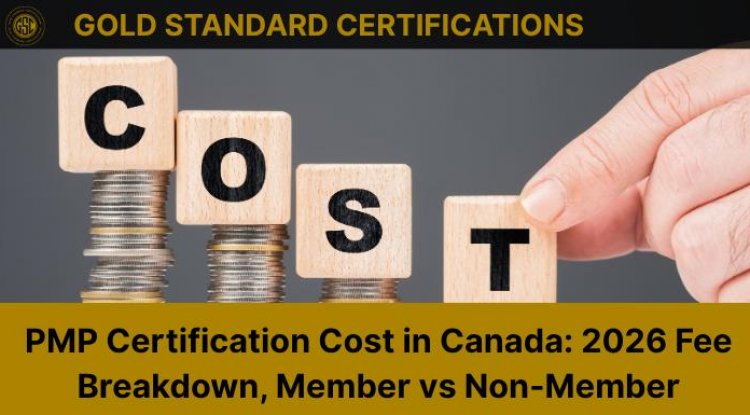
Fees are also identical in structure. PMI charges PMP exam fees in US dollars everywhere. Since 6 August 2026 the exam fee is $445 for PMI members and $675 for non-members, a $230 difference. If you are in Canada, your cost in Canadian dollars depends on the exchange rate when you pay, so we do not quote a fixed Canadian figure here.
What PMI's Salary Data Says About Canada and the US
PMI publishes its Earning Power: Project Management Salary Survey periodically. Two editions matter for this comparison, and mixing their numbers is an easy mistake to make. Here they are separately.
13th edition: Canada and US side by side
The summary version of the 13th edition lists country-level medians in US dollars, converted from local currency.
|
Measure (13th edition) |
United States |
Canada |
|
Respondents in the sample |
4,430 |
2,083 |
|
Median annual salary (USD) |
$120,000 |
$73,761 |
|
PMP holders vs non-PMP, median |
44% higher |
34% higher |
The same report states that PMP holders have median salaries 33% higher on average across the 21 countries surveyed. By that edition's measure, both Canada (34%) and the United States (44%) were at or above the average premium.
14th edition (2025): the latest US figures
The 14th edition reflects 14,628 project professionals across 21 countries, surveyed between 9 March and 19 April 2025. PMI's public release reports:
|
Measure (14th edition) |
Figure |
|
US median, PMP-certified |
$135,000 |
|
US median, non-certified |
$109,157 |
|
Difference in the US |
Nearly 24% |
|
Premium across the 21 countries surveyed |
17% |
|
US PMP holders with 10+ years of PMP experience |
$173,000 median |
|
US PMP holders certified under 5 years |
$123,000 median |
|
Pharmaceuticals and aerospace (US, PMP median) |
$150,000 |
The public release does not give Canadian figures. PMI says its interactive salary tool, which lets you explore results by country, role and experience, is exclusive to PMI members. If you are a member, check it for the current Canadian numbers, and we will update this post when PMI publishes a public Canada breakdown.
Why the Premium Differs Between Editions
Look at the US premium. The 13th edition reports 44% and the 14th reports nearly 24%. Does that mean the PMP lost half its value? Probably not. Different editions use different samples, different years and different compositions of respondents, so the figures are not directly comparable. The 21-country premium tells a similar story: 33% in the 13th edition and 17% in the 14th.
What we can say with confidence is that in both editions, certified respondents had higher median salaries than non-certified ones. How large the gap is depends on the survey. Any article that quotes 44% for the US and 24% for the US in the same breath is mixing editions, and any article that treats one figure as a promise is overselling.
Reading the US and Canada Gap Without Fooling Yourself
A quick calculation using the 13th edition medians shows the size of the difference between the two countries.
US median = $120,000
Canada median = $73,761 (in USD)
US / Canada = 120,000 / 73,761 = 1.63
Canada / US = 73,761 / 120,000 = 0.61
The US median is about 63% higher than the Canadian median when both are expressed in US dollars. That number needs context before you act on it.
- It covers all project professionals, not only PMP holders. It tells you about the market, not the credential.
- It is a currency conversion. Exchange rates move, so the gap changes with them.
- It ignores what salary buys. Cost of living, taxes, benefits and healthcare differ between the countries.
- It mixes roles and seniority. Sample composition by industry and level can differ between countries.
The more useful comparison for your decision is the second one: how much more do certified professionals earn than non-certified ones in your own market? That is the premium, and it is 34% for Canada in the 13th edition.
How Big Is the PMP Premium in Dollars?
Percentages hide the scale. Using the 14th edition US figures, here is the arithmetic.
PMP median = $135,000
Non-certified = $109,157
Difference = 135,000 - 109,157 = $25,843
Difference in % = 25,843 / 109,157 = 23.7%
Per month = 25,843 / 12 = about $2,154
Now a payback illustration. Suppose, hypothetically, that your total investment in exam fee, training and membership came to $2,500. If you captured the full median difference, that is a payback of about 1.2 months.
Payback = 2,500 / 2,154 = 1.16 months
Treat this with care. It is an upper-bound illustration, not a forecast, for two reasons. The $25,843 compares two groups of people, not one person before and after certifying, and the two groups differ in experience, role and employer. Also, PMI's own release notes that nearly two-thirds of PMP-certified respondents saw a total compensation increase over the previous 12 months, and that three-quarters received raises of up to 10%. Typical gains are real but much smaller than the group gap. Realistic expectations come from your own pay and your target roles, not from the median.
What Moves Pay More Than the Credential Alone
The 14th edition US data shows several factors that matter, and they apply in both countries.
|
Factor |
What the data shows (US, PMP holders) |
|
Years holding the PMP |
$173,000 median for 10+ years vs $123,000 for under 5 years, about 41% higher |
|
Industry |
Pharmaceuticals and aerospace reported a $150,000 median, above the overall $135,000 |
|
Experience and role |
PMI's tool segments results by role and experience, member-only for country-level data |
173,000 / 123,000 = 1.41 (41% higher)
Notice that tenure with the credential matters. The PMP is not a one-time bump. It tends to pay more as it combines with years of delivery experience, and that is where the long-term value sits.
What the Data Does Not Tell You
- It does not prove the PMP caused the higher pay. People who pursue certification may differ in ambition, role or employer.
- It does not show hiring requirements. We did not find a PMI primary source on how often Canadian or US job postings require or prefer the PMP, so we make no claim about that. Check postings for roles you want.
- It does not give a fresh Canada figure for 2025. The public 14th edition release has US and 21-country figures only.
- It does not tell you your own result. Medians describe groups.
How to Judge the Value for Your Situation
A five-step check is more useful than a median.
- Search live job postings. Pull 20 postings for the roles you want in your city. Count how many list the PMP as required or preferred.
- Compare salary ranges. Note ranges for postings that mention the PMP against similar roles that do not.
- Ask your employer. Some employers reimburse training and exam fees or tie certification to promotion.
- Add up your real cost. Exam fee ($445 member or $675 non-member), training, and any PMI membership. See our Canada cost breakdown for the full list.
- Check eligibility first. You need the right months of experience for your education tier and 35 hours of training. If you are short, plan for it before you pay for anything else.
Canada-Specific Points Worth Knowing
- Costs are charged in US dollars, so exchange-rate timing affects your Canadian cost. Budget with a margin.
- Training provider rules apply in Canada exactly as in the US. From 1 December 2026, live instructor-led training counts only if delivered by a PMI Authorized Training Partner or eligible accredited academic program.
- Remote delivery means Canadian and US candidates can use the same live online courses.
- Employers in project-heavy industries, such as construction, IT, energy and healthcare, are the places to test demand with real postings.
FAQ
Is the PMP recognized in Canada?
The PMP is a global credential issued by PMI under the same exam and eligibility rules wherever you live. PMI's Earning Power survey covers Canada as one of its 21 countries, and Canada was among the countries where certified respondents reported higher median salaries than non-certified ones.
Do PMP holders earn more in Canada or the US?
In PMI's 13th edition survey, US respondents had a higher median salary in US dollars ($120,000 vs $73,761). The PMP premium over non-certified peers was also larger in the US edition figures (44% vs 34%). Both comparisons come from one edition, and salary levels reflect many factors beyond the credential.
How much more do PMP holders earn in the US?
PMI's 14th edition (2025) reports a US median of $135,000 for PMP-certified respondents against $109,157 for non-certified respondents, a difference of nearly 24%.
Why do the premium figures differ between editions?
Different surveys, different respondents and different years produce different results. The 13th edition showed a 44% US premium and the 14th shows nearly 24%. Treat each edition as its own snapshot and avoid mixing numbers from different ones.
Does the PMP cost the same in Canada and the US?
PMI charges exam fees in US dollars regardless of where you live. Since 6 August 2026 the fee is $445 for PMI members and $675 for non-members. Your Canadian dollar cost depends on the exchange rate on the day you pay.
Are the Canadian salary figures in Canadian dollars?
The 13th edition table we used reports salary in US dollars, converted from local currency. Do not read $73,761 as Canadian dollars.
Does PMI publish 14th edition Canada figures?
The public PMI pages and press release we reviewed give US figures and a 21-country premium, but no Canada breakdown. PMI says country, role and experience data are available through an interactive tool exclusive to members.
Is a PMP worth it if I already have strong experience?
It depends on your field and your employer. The data shows certified respondents earn more on average, but that does not prove the certification caused the difference. Check target job postings in your industry and region before deciding.
Related Reading
- PMP Certification Cost in Canada: 2026 Fee Breakdown: exam fee, training and membership costs in detail
- PMP Certification Total Cost in 2026: the full cost of getting certified
- Lean Six Sigma Combo Certification: Roles & Salaries (US/Canada): salary data for the Lean Six Sigma route
- New PMP Eligibility Requirements 2026: What Changed: check you qualify before you invest
Ready to Get Started?
Gold Standard Certifications is a PMI Authorized Training Partner (ATP). The 35-hour live PMP bootcamp is aligned to PMBOK 8 and the current ECO. It is led by Stephen Mercer, PMP, a PMI ATP instructor with 10+ years of experience, 6,150+ professionals trained, and 205+ PMP bootcamps delivered, and includes 2,000+ practice questions and mock exams built around the current domain weighting.
- PMP® Certification Training: 35-hour live online bootcamp, aligned to PMBOK 8 and the 2026 ECO
Includes application assistance and post-class support, backed by a 100% money-back guarantee. Rated 4.8 (Excellent) by students across 900+ reviews on Trustpilot.