PMP Exam Question Types 2026: 3 New Formats to Know
Quick Answer : The 2026 PMP exam introduced three new question formats: Case/Scenario sets, Enhanced Matching, and Graphic-Based questions, bringing the total to eight formats in rotation. The exam is still 180 questions across 240 minutes; only how a portion of those questions are presented changed.
As of September 2026, the PMP exam hasn't just changed what's tested, it changed how it's asked. Three new question formats joined the rotation this cycle, and if your prep material was written before July 2026, there's a real chance you haven't seen any of them. Here's every format currently in use, and what each one actually demands.
For context: the exam as a whole is still 180 total questions (170 scored, 10 unscored pretest) across 240 minutes. These three new formats didn't change that total, they changed how a portion of those 180 questions are presented to you.
What's New This Cycle
- Case/Scenario sets: a short project scenario followed by several connected questions
- Enhanced Matching: matching tasks that test relationships across more items and more nuance than the older single-pair matching format
- Graphic-Based questions: questions built around a diagram, chart, or visual (a network diagram, a Gantt chart, a stakeholder map) rather than text alone
Still in Rotation From Before
- Multiple-choice, single response: the classic one-correct-answer format
- Multiple-choice, multiple response: select all answers that apply, no partial credit for a partial selection
- Point and Click: select the correct element directly on a diagram or interface
- Matching: pair items from two columns based on a stated relationship
- Pull-down list: choose the correct answer from a dropdown embedded in a sentence or scenario
All PMP Question Formats at a Glance
|
Format |
What It Tests |
New in 2026? |
|
Case/Scenario sets |
Applying multiple domains to one connected situation |
Yes |
|
Enhanced Matching |
Precise relationships across several items, not just recall |
Yes |
|
Graphic-Based |
Reading and interpreting a diagram, chart, or visual directly |
Yes |
|
Multiple-choice (single) |
Straightforward recall and application |
No |
|
Multiple-choice (multiple) |
Complete, accurate selection with no partial credit |
No |
|
Point and Click |
Locating the correct element on a diagram or interface |
No |
|
Matching |
Pairing items based on a stated relationship |
No |
|
Pull-down list |
Selecting the correct term within a sentence or scenario |
No |
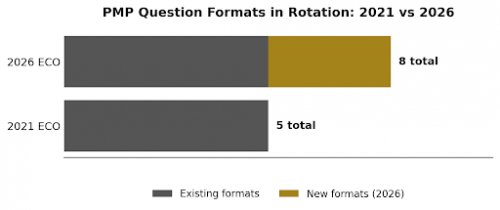
Figure 1: Question formats in rotation, 2021 ECO vs 2026 ECO
Alt text (paste into CMS): "Horizontal bar chart showing PMP question formats grew from 5 in the 2021 ECO to 8 in the 2026 ECO, with 3 new formats added"
Case/Scenario Sets, In Detail
This is the format most likely to catch unprepared candidates off guard. You're given a short project scenario, sometimes a paragraph, sometimes with supporting data, and then asked several questions that all reference that same scenario. Getting an early question wrong doesn't just cost you that point, it can make the scenario harder to read correctly for the questions that follow. These sets are also where cross-domain testing shows up most: one scenario can pull from People, Process, and Business Environment in the same set.
Graphic-Based Questions, In Detail
Graphic-Based questions ask you to read or interact with a visual: interpreting a network diagram to find the critical path, reading a burndown chart to assess sprint health, or identifying a governance structure from an org chart. These test the same underlying knowledge as text-based questions, but require comfort reading project artifacts visually rather than being told the numbers in a sentence.
Enhanced Matching, In Detail
Enhanced Matching goes beyond simple one-to-one pairing. You may be asked to match multiple items to a single category, or match items where more than one plausible pairing exists but only one is correct given the full context of the question. It rewards precise understanding over pattern recognition, since surface-level familiarity with terms isn't enough to reliably get these right.
How Question Formats Map to Domains
A common misconception is that certain formats belong to certain domains, for example, assuming Graphic-Based questions are mostly Process because diagrams feel technical. In practice, every format can draw from any domain, and the 2026 domain weighting shift didn't change that. A Graphic-Based question can just as easily test a Business Environment governance chart as a Process network diagram, and a Case/Scenario set almost always blends more than one domain by design. Format and domain are two separate dimensions of the exam, not the same thing.
Why PMI Added These Formats
Multiple-choice alone tests recall reasonably well, but it under-tests judgment, the ability to weigh a real, messy project situation and choose the best next action. Case/Scenario sets, Graphic-Based questions, and Enhanced Matching all push toward testing applied judgment instead of isolated fact recall, part of the same July 2026 shift covered in our old vs new PMP exam comparison, and it lines up with PMI's broader move toward testing how project managers actually think through problems, not just what they've memorized.
Common Mistakes With the New Question Formats
- Answering a Case/Scenario question in isolation without re-reading the shared scenario it belongs to
- Skimming a Graphic-Based question's diagram instead of studying it as carefully as you would a paragraph of text
- Locking in the first plausible pairing on an Enhanced Matching question instead of checking every option for a more precise fit
- Practicing exclusively with older question banks that don't include any of the three new formats
How to Prepare for Each Format
- For Case/Scenario sets: practice reading a full scenario before looking at any of its questions, and re-read it after each question to keep the full context active
- For Graphic-Based questions: get comfortable reading network diagrams, Gantt charts, and burndown charts cold, not just calculating from numbers already given to you in text
- For Enhanced Matching: resist the urge to match on the first plausible pairing, check whether a more precise match exists elsewhere in the set before committing
- Across all formats: practice with material built specifically for the current ECO, older question banks were built for a different exam structure and can teach the wrong instincts
See It in Action: A Sample Case/Scenario Set
Illustrative example, not an actual PMI exam item:
Scenario: A project team is two sprints from release when a key vendor notifies the project manager of a three-week material delay. The sponsor wants the original release date held regardless.
- Question 1 might ask: What should the project manager do first?
- Question 2 might ask: Which project document should be updated to reflect the vendor's delay?
- Question 3 might ask: If the sponsor insists on the original date, what's the most appropriate next step?
That's the shape of a Case/Scenario set: one situation, several connected questions, each pulling from a different angle. Question 2 leans Process (updating a schedule or risk document), Question 1 and 3 lean People (managing the sponsor conversation), and if a contract or compliance issue were added to the scenario, Business Environment would enter too. Answering each question in isolation, without holding the full scenario in mind, is the most common way candidates lose points on this format.
Time Management by Format
With 180 questions in 240 minutes, you have roughly 80 seconds per question on average, but that average hides real variation by format:
- Case/Scenario sets: budget more time per question here since you're re-referencing shared context each time, rushing the first read costs you on every question tied to it
- Graphic-Based: don't rush the diagram itself, misreading it wrong can cost you the question regardless of how well you understand the underlying concept
- Enhanced Matching: these generally take longer than simple matching, treat them accordingly rather than expecting a quick format
- Simpler formats (multiple-choice, point-and-click, pull-down list): these are where you can move faster and bank time for the more demanding formats
Glossary: Key Terms in This Post
- Case/Scenario set: a short project situation followed by multiple connected questions that all reference it
- Enhanced Matching: a matching format testing precise relationships across multiple items, not simple one-to-one pairing
- Graphic-Based question: a question built around a diagram, chart, or visual that must be read or interpreted directly
- Pretest question: one of the 10 unscored questions PMI includes to test future exam content; you can't tell which questions are pretest, so every question should be treated as if it counts
Related Reading
- PMP Exam Content Outline 2026: What Changed in the ECO
- PMP Domain Weightings 2026: What Changed and Why
- Old vs New PMP Exam: What Changed on July 9, 2026
Want practice built for the current format? See GSC's PMI-ATP-aligned PMP course.
Frequently Asked Questions
What new question types were added to the PMP exam in 2026?
Case/Scenario sets, Enhanced Matching, and Graphic-Based questions, alongside the existing multiple-choice, point-and-click, matching, and pull-down list formats.
What is a Case/Scenario set on the PMP exam?
A short project scenario followed by multiple related questions, testing how well you can apply several domains to one connected situation rather than isolated facts.
Can I practice the new PMP question formats before exam day?
PMI's official prep materials and PMI Authorized Training Partner courses are the most reliable source for practicing the current format, since third-party question banks are often still built on the older exam structure.
Do the new PMP question formats test different domains than the older formats?
No. Every question format can draw from any of the three domains. The formats changed how a question is asked, not which domain it belongs to.
Are Graphic-Based PMP questions harder than text-based questions?
Not inherently harder, but they test a different skill: reading a diagram or chart directly instead of being told the same information in a sentence, which takes separate practice.
How many new PMP question formats were introduced in the 2026 ECO?
Three: Case/Scenario sets, Enhanced Matching, and Graphic-Based questions, added on top of the five formats already in use.
How much time should I budget per question on the PMP exam?
About 80 seconds on average across 180 questions in 240 minutes, but that varies by format: Case/Scenario sets and Enhanced Matching typically need more time, simpler formats let you move faster.